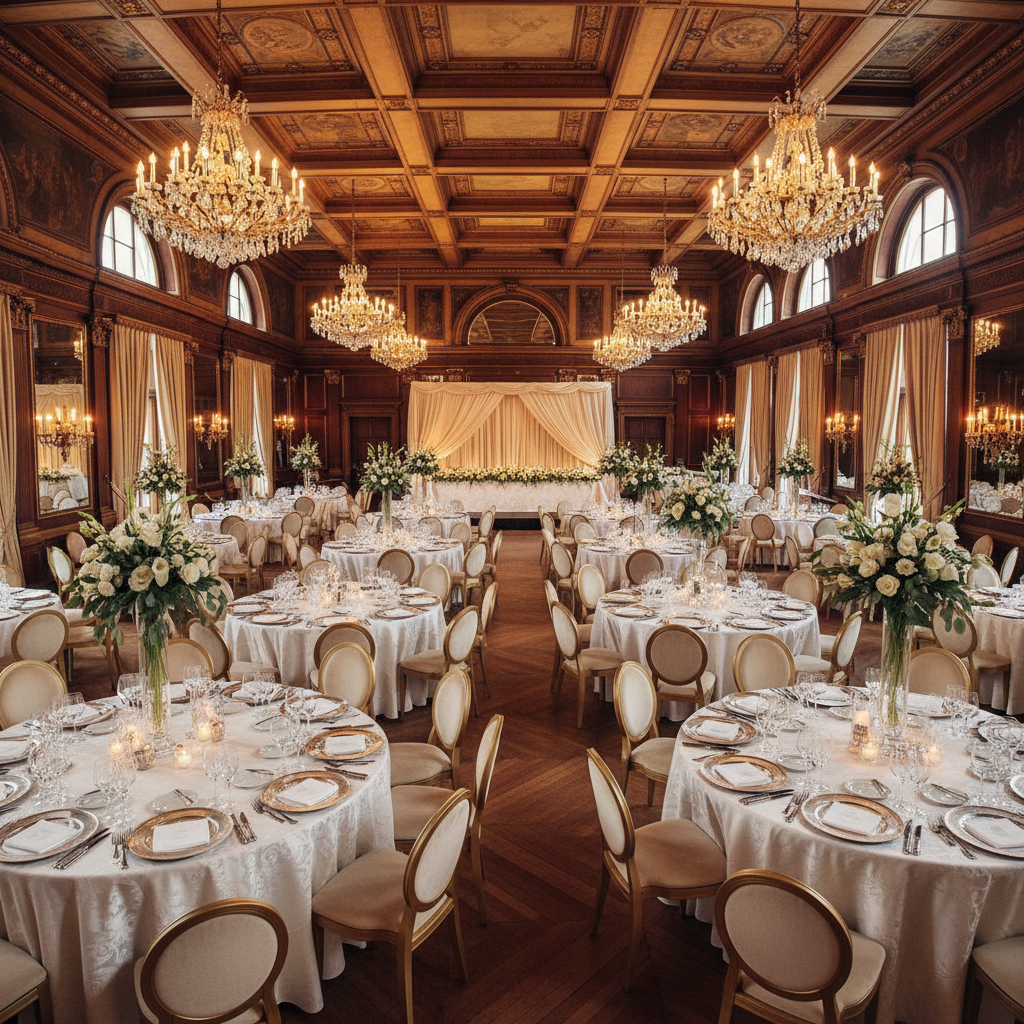
The venue decision shapes everything else
Of all the decisions in event planning, venue selection has the most downstream consequences. The venue determines the guest capacity, the layout options, the catering flexibility, the parking logistics, and in many cases the overall aesthetic of the event. Getting this decision right — or wrong — has a ripple effect across the entire planning process.
The questions below are not a comprehensive checklist. They are the questions that matter most and that are most often overlooked in the initial excitement of visiting a promising space.
Capacity and layout questions
What is the venue's stated capacity, and under what configuration? A venue that holds two hundred people for a standing cocktail reception may only accommodate one hundred twenty for a seated dinner. Confirm the capacity for your specific event format, not the maximum number.
What are the layout options, and are there restrictions? Some venues have fixed furniture or floor plans that cannot be changed. Others offer complete flexibility but require you to rent and arrange everything. Understanding what is included — and what is not — affects both the planning process and the budget.
Vendor and catering questions
Does the venue have an exclusive catering arrangement, or can you bring your own vendor? Exclusive catering contracts significantly limit your options and can affect the budget in ways that aren't immediately obvious from the venue rental fee alone.
Is there a preferred vendor list, and are you required to use it? Some venues require vendors from an approved list. Others simply recommend vendors they have worked with. Understanding the difference matters for both flexibility and cost.
Logistics and operations questions
What is the load-in and load-out schedule? Events rarely begin when guests arrive. Setup requires time — sometimes several hours — and venues vary significantly in how much setup access they provide. Confirm the exact window you have for setup and teardown, and whether there are fees for overtime.
What are the parking arrangements for guests? For events with a significant number of guests, parking logistics can make or break the arrival experience. Confirm the number of spaces, whether overflow parking is available, and whether valet service is an option.
What are the noise restrictions and curfew policies? Many venues — particularly those in residential areas or mixed-use buildings — have strict noise limits and end times. If your event includes live music or extends into the evening, this question is essential before signing anything.
Contract and policy questions
What is the cancellation and rescheduling policy? Circumstances change. Understanding the financial and contractual consequences of cancellation or rescheduling before you sign is far better than discovering them when you need to make a change.
What is included in the rental fee, and what incurs additional charges? Venue pricing can be deceptive. A competitive rental rate sometimes excludes items that are standard at other venues — tables, linens, audio equipment, security staff, or cleaning fees. Get a clear itemized picture of the total cost before comparing venues.
What are the insurance requirements? Many venues require event hosts to carry liability insurance or name the venue as an additional insured party. This is a manageable requirement, but it needs to be factored into the planning timeline and budget.
The site visit
No amount of photography or virtual tours replaces an in-person site visit. Visit the venue at the same time of day as your event to understand the natural light. Walk the guest experience from arrival to the main event space. Use the restrooms. Check the acoustics. These details matter and they are only visible in person.